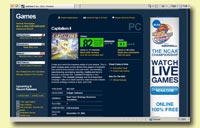
Malcolm Ferrier from British Columbia Institute of Technology started a pilot project in 2009 using Capitalism 2 “as a teaching tool in the Management of Information Systems (MIS) courses in two of the second year business diploma programs, the International Trade and Transportation program and the Information Technology Management program.”
The pilot project involved training the students through built-in tutorials to use the program and then creating a multiplayer competition at the end of the course in which the students compete with each other in a simulated business environment that requires the student to build a successful business and compete for market share with their classmates. Their final mark for the exercise was directly related to their business success in the game. Student feedback was overwhelmingly positive and the software will be used again in 2010.
One of the key difficulties for post-secondary instructors is to hold the attention of the students. Given the ubiquity of entertainment options such as video games, big screen TV, and 3D IMAX movie theatres, an instructor standing at the front of a classroom writing on a chalkboard seems like a sepia-toned image from the past.
Given that the type of technology options listed above are well-suited for keeping the focus of students that have many other things clamouring for their attention, it follows that education should be taking advantage of the appeal of high-technology entertainment. This was the motivation for this pilot project at BCIT.

A research is conducted after determining that a simulation video game would be the ideal teaching tool for demonstrating how an Enterprise Resource Planning (ERP) system actually functions. Given the scores from Gamespot and Metacritic as well as positive feedback from renowned educational institutions, we are confident that Capitalism II would be an effective teaching tool.
Capitalism2 has a comprehensive business model. Due to its complexity, students were instructed to work through a set of eight progressive tutorials in the Entrepreneurship campaign to learn the game interface. Then, they started on the more difficult Corporate campaigns. Other applications include:
Grading Students’ Performance
A separate multiplayer game was created for each group of students. They were given an hour to build a successful business and compete for market share within each group's simulated business environment. Each student's performance was monitored by the instructor during play.
Testing Textbook Theories
For example, Porter’s Generic Strategies can be applied to the student’s business by creating a niche industry that focuses on quality and see if the strategic framework holds up in a competitive retail environment.
Learning Real-life Business Practice
Students were also encouraged to set up multiplayer games with each other to practice competing with real players as well as experiment with the various features of the game.
For the multiplayer competition, the students were split up into groups of 5 or 6 and a separate multiplayer game was created for each group. They were allowed to use the stock market, compete in all industries and products, and create any part of the supply chain. The student’s performance was monitored by the instructor during play.
Their mark was calculated as follows:
- Each student starts with 7/10 which can go up and down based on their performance.
- The winner (highest income, profitability and market share) receives 10/10.
- If the student can avoid bankruptcy, they receive 8/10.
- They can potentially raise their grade by submitting a short paper explaining their strategy and why they believe it was not successful.